
Baltic Rehearsals: how Riga, Vilnius and Tallinn found a stage at one of Europe’s leading festivals
Eight musicians from three Baltic capitals, four unexpected duos, one summer to compose and four evenings on stage at the Dutch festival Le Guess Who?. How a network of independent radio stations dreamed up Baltic Rehearsals, who represented Latvia, and why the result will soon be released on vinyl – as a calling card for the Baltic scene.
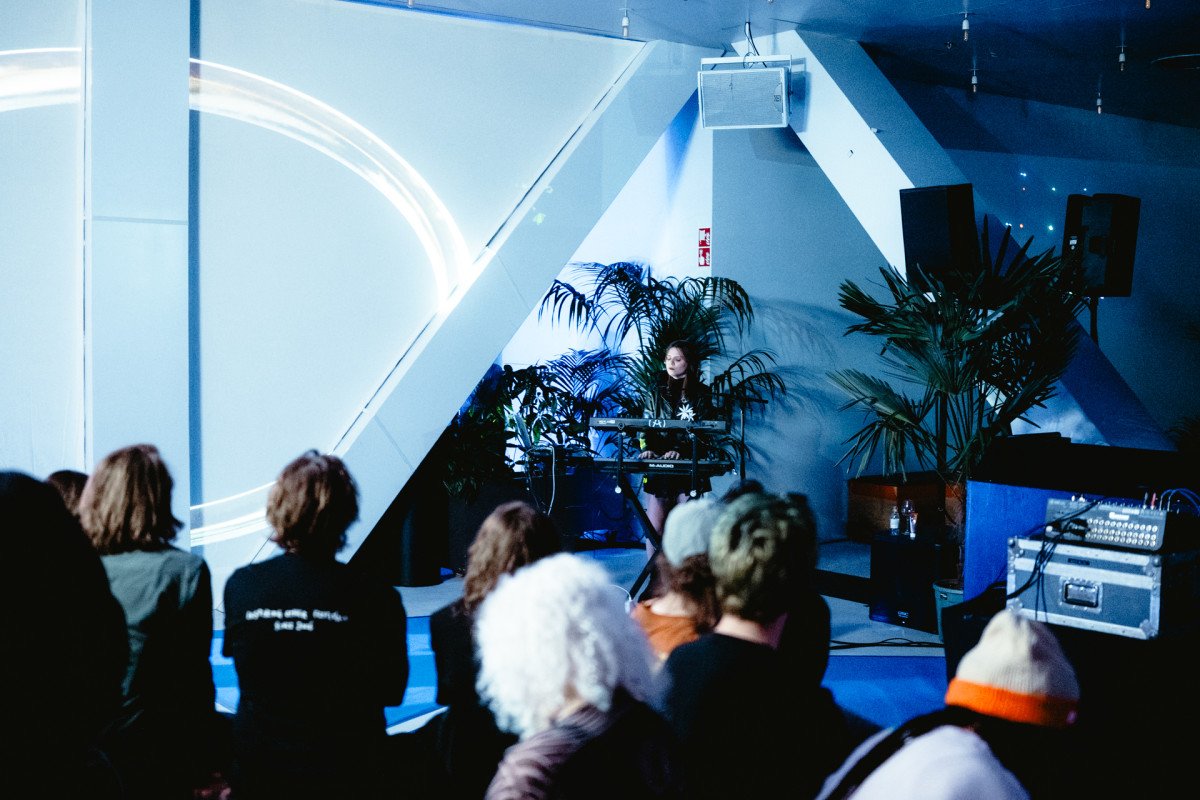
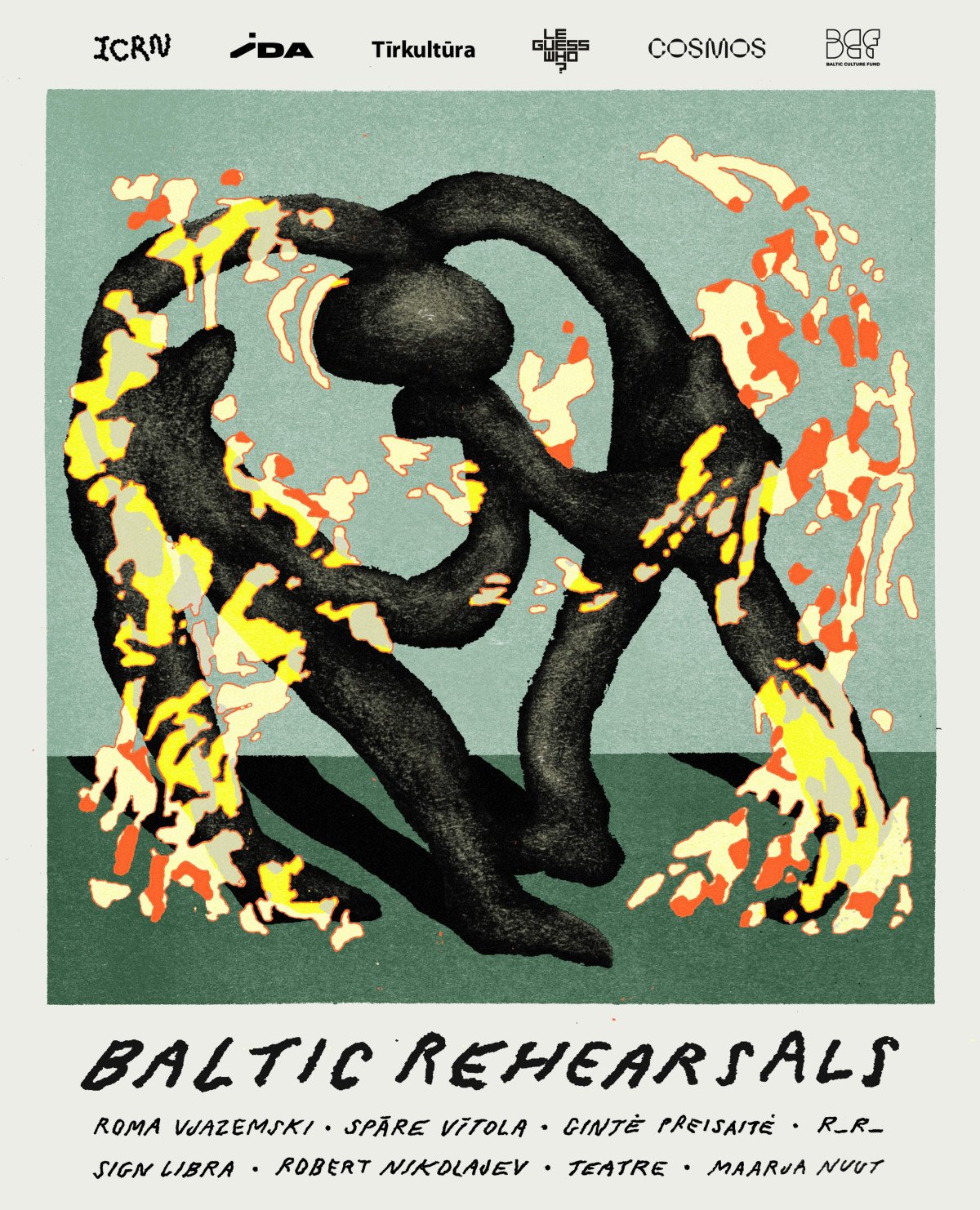
Every November, for four days, Utrecht runs strictly to the Le Guess Who? timetable. Concerts take place in clubs, churches, theatres and former warehouses, but the heart of the festival is the vast TivoliVredenburg concert complex. Each evening, its foyer hosted the COSMOS stage and radio studio – and this time, the sounds coming out of it also belonged to Riga, Vilnius and Tallinn. Latvian musician and producer Sign Libra with Estonia’s Robert Nikolajev; Latvian sound artist Spāre with Tallinn electronic producer Roma Vjazemski; Lithuanian producer Teatre with Estonian singer and violinist Maarja Nuut; Riga’s R_R_ with Lithuanian musician Gintė Preisaitė. As recently as last summer, most of these pairs had never even met.
The project was called Baltic Rehearsals, and the name turned out to be more fitting than it might first appear: what was heard in Utrecht was never meant as a finished product, but as a work in progress.
A festival that listens
Le Guess Who? was born in 2007 as a two-day showcase of Montreal’s indie scene at Utrecht’s Tivoli club. It was founded by bookers Bob van Heur and Johan Gijsen, and has since grown into one of the most respected events on the European music calendar: this year it celebrated its twentieth anniversary edition, with more than 150 artists on the bill.
The festival’s motto is Listening is the Way Forward, and its stages comfortably accommodate the avant-garde, jazz, dub marathons, Andean music and the sounds of Cabo Verde side by side.
A key part of this philosophy is COSMOS, the festival’s hybrid platform, which runs all year round. Each year, it selects several COSMOS Embassies – independent scenes from different corners of the world that tell their own stories from the inside, through writing, video, radio broadcasts and concerts in that very foyer.
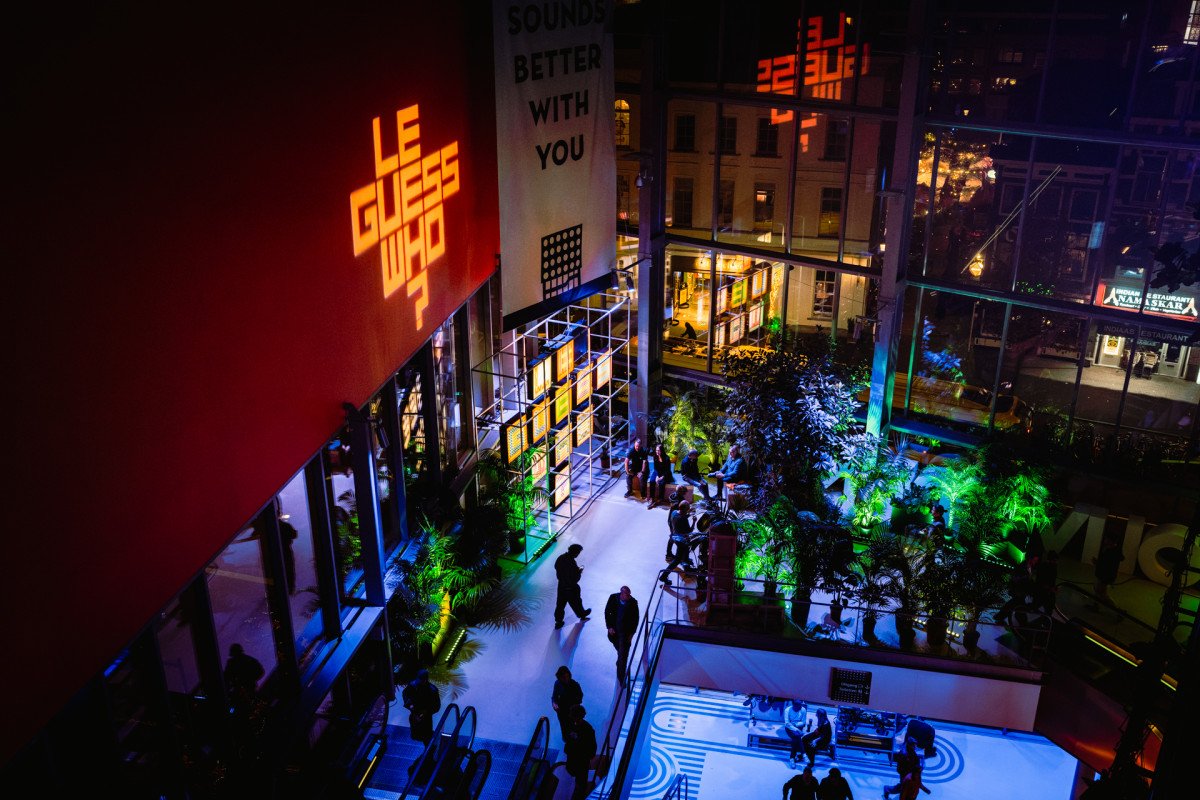
“At the festival, COSMOS comes to life in the Pandora Foyer and is broadcast live via Refuge Worldwide. This year it focused on the local scenes of Osaka, Cabo Verde and, actually, Amsterdam, with Baltic Rehearsals acting as a fourth special project. Every year, COSMOS invites new partners to join the network, such as local DIY venues, labels or similar initiatives, to tell their story from the ground up,” Samantha Lippett, the project’s curator and a member of the festival team, told LSM.
Radio as a meeting point
The Baltic story reached the festival not through managers or agencies, but through radio. Samantha Lippett lives in Vilnius and, alongside her work for Le Guess Who?, runs ICRN – the Independent Community Radio Network, an alliance of independent community radio stations across Europe. The network was founded in 2022, when three stations – Vilnius’s Palanga Street Radio, Riga’s Tīrkultūra and IDA, based in Tallinn and Helsinki – decided that surviving alone was harder than surviving together.
“It was the time after COVID, when a lot of community radio stations had lost their spaces and had to rethink what their purpose was in their community,” Samantha recalls. “But at the same time, radio started to thrive, because it was one of the few things that could still happen during lockdown. That summer we visited all the Baltic states and Helsinki as well. It started off as a small knowledge-sharing thing: meeting up, organising small events, getting to know each other’s practices – and noticing that we all had the same sustainability challenges. We really thought it was going to be a tiny project. Now it has grown enormously.”
Today ICRN counts 20 stations, stretching from Dublin to the Icelandic town of Seyðisfjörður. Its ties to Le Guess Who? go back several years: in 2023, Riga’s Tīrkultūra put together a survey of the Latvian underground for the COSMOS pop-up radio, and in 2024 ICRN itself became a COSMOS Embassy.
“I’m from the UK, but I’ve been living in the Baltics for six years, and I’ve discovered so much incredible music,” says Samantha. “But I think it still perhaps lacks the infrastructure to get that music out of the region and into major festivals like Le Guess Who?, who share the same philosophy. There are perhaps few people on the ground who see how the local scene is developing and how diverse its artists are, and tell others about it.”
She acknowledges that things are changing: in recent years the Lithuanian-Belgian group Merope has played Le Guess Who? several times, and this year vocalist and kanklės player Indrė Jurgelevičiūtė returned with a new collaborative project. Even so, Baltic names remain few and far between on the line-ups of Europe’s major festivals.
A blind date
Simply bringing a handful of Baltic artists to Utrecht didn’t feel like enough to the team.
“We didn’t think it was enough to just do a showcase,” says Samantha. “This could be something much bigger, and it could also give radio stations the opportunity to host artists in residence and to create something new. That’s how we came up with the model of building new artistic duos: every pairing is two artists from two different countries.”
The residencies took place this summer in all three capitals. In Vilnius, the DIY space Retrito Smarsas served as the base, with MAMA Studios used for the piano recordings. In Latvia, the artists worked in Sign Libra’s studio; in Tallinn, at the IDA radio studio.
The longlist of candidates was drawn up by four people: Samantha Lippett; IDA co-founder Robert Nikolajev; Reinis Semēvics of Tīrkultūra; and Riga-based sound engineer, music obsessive, DJ and radio host Michael Holland, who presents the show Ono on London’s NTS.
“First we made a list – this person could be cool, this person could be cool – a long list, actually,” says Michael. “Robert was choosing the Estonian artists, Samantha the Lithuanian ones, and I was pushing for the Latvian artists I thought were the most exciting and interesting. I didn’t get entirely my own way – I might have pushed it in a slightly different direction. But we had to strike a balance and fit together people we thought might work well together musically.”
On their own, he is convinced, these collaborations would never have happened – and that is precisely the point.
“We really want the connections between the cities to become more fluid. For more cross-pollination to happen,” says Michael. “And Sam’s connection with Le Guess Who? was the perfect place to present it all. Samantha is, in a way, the glue – she connects everything.”
The pairings turned out to be not only international but also gender-balanced: each duo brings together a woman and a man. According to Samantha, though, that was pure coincidence.
“We looked and realised that’s just how everyone had been paired. Fifty-fifty – very good for the report,” she laughs.
Latvian artists at the festival
Three of the eight participants come from Latvia, and all three could hardly be more different.
Sign Libra is the project of Latvian musician Agata Melnikova. Having studied piano and music theory from childhood, she builds songs out of reverb-soaked, almost wordless vocals, layered synths and rhythms; the central theme of her albums is nature and its connection to human life. Sign Libra’s records have been released by France’s Antinote and New York’s RVNG Intl. In Utrecht, her pairing with Robert Nikolajev – a veteran of Estonian electronic music known under a multitude of aliases – was presented as two solo sets.
Spāre is a Latvian sound and visual artist with an academic background. She works with violin, electronics, pump organ, field recordings and environmental sound, assembling them into collage-like, almost cinematic landscapes, and often tries to imagine how animals or objects might hear the world. Her musical partner was Tallinn’s Roma Vjazemski, who started out as a hip-hop producer before arriving at a slow-moving, atmospheric sound built on unhurried rhythms.
R_R_ is the alias of Reinis Semēvics – sound artist, producer, composer, lecturer and DJ – who co-runs the Riga online radio station Tīrkultūra and has hosted shows on NTS, The Lot Radio and Refuge Worldwide. His music has been released by international labels – Growing Bin Records and Public Possession in Germany, and Kankyō Records in Japan. His work moves between ambient, unhurried atmospheric rhythms and field recordings of nature and the city, framed by subtle rhythmic structures. For this project he was paired with the Copenhagen-based Lithuanian pianist and composer Gintė Preisaitė.
The duo spent two days in a studio with a grand piano: Gintė played while Reinis recorded and played a little himself, and the remaining days were devoted to composing. They worked, in his words, “without any expectations” – though with the understandable stress of a deadline, knowing that very soon something had to be ready. He sees the concert in Utrecht as part of the process, too.
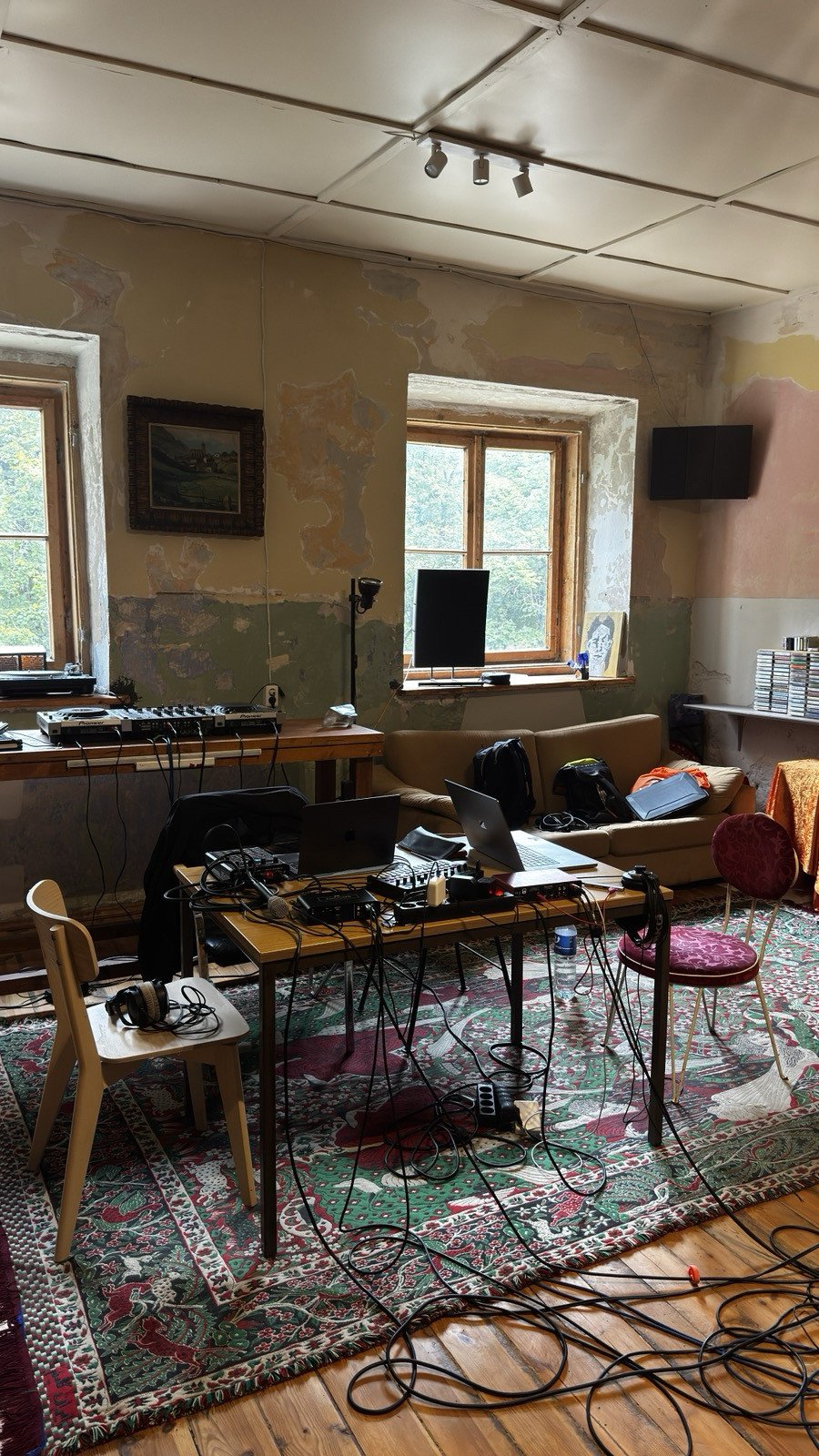
“It’s not something set in stone, and it’s not a perfectly rehearsed, polished performance. The overriding feeling is that while we were playing, we were also improvising, trying to discover something new in the sound,” says Reinis.
Beyond the concerts, the project also has a radio dimension. For Refuge Worldwide – the Berlin station that is COSMOS’s main broadcasting partner – Michael Holland produced a series of hour-long programmes, one for each duo, combining interviews with the artists and deep dives into their back catalogues. All the performances in Utrecht were also broadcast live via Refuge Worldwide and ICRN member stations, including Tīrkultūra.
Radio on the move
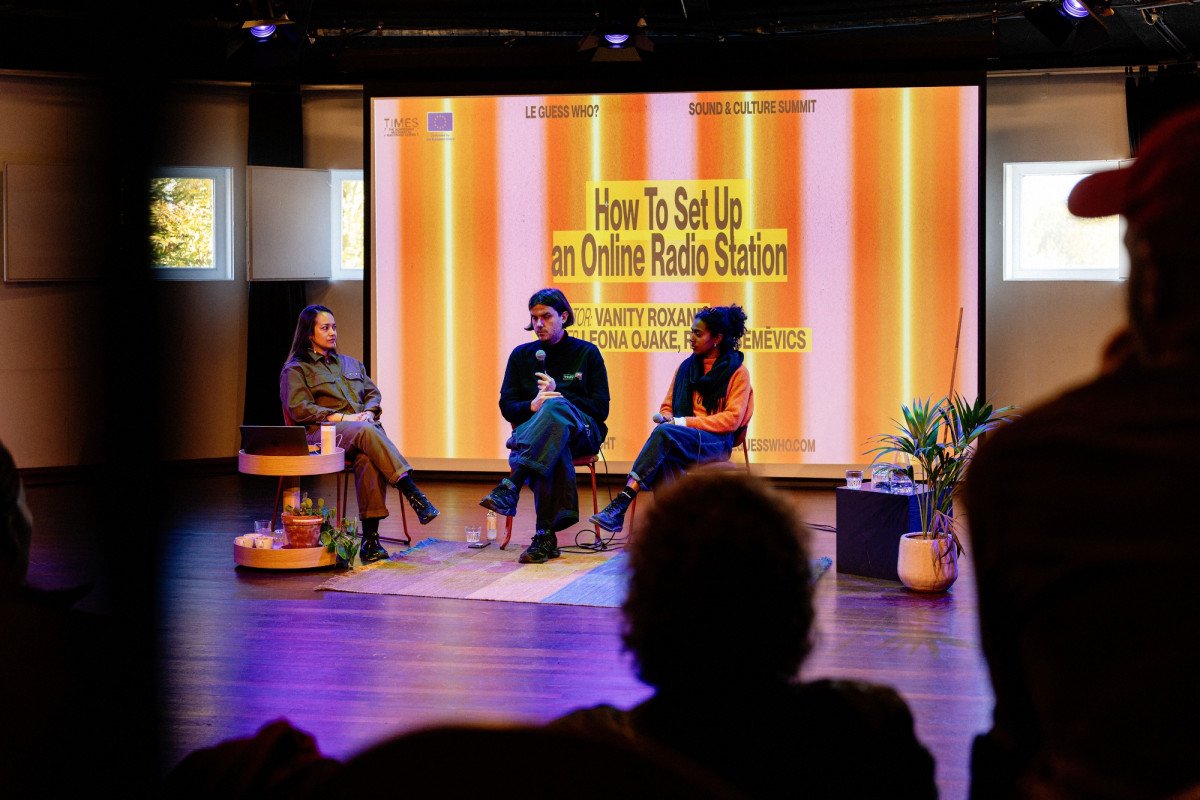
At the festival, Reinis appeared not only as a musician. On Friday, 6 November, he joined Leona Ojake of Refuge Worldwide for 'How To Set Up an Online Radio Station', a talk at the Sound and Culture Summit at Theater Utrecht. The title turned out to be almost autobiographical, and Reinis also told the story of Tīrkultūra.
Tīrkultūra was founded in 2015 by Rolands Pēterkops and Jānis Šipkēvics as a weekly two-hour radio show built mostly around interviews and news of what was happening in Riga’s art and music scenes. Reinis joined that same year, first as a technical assistant and then as one of its makers.
“Tīrkultūra was born because the radio landscape in Riga at the time wasn’t very diverse – mostly pop stations competing over who could run the most ads, while the music itself, and what it has to say, faded into the background,” Reinis explained. “We wanted to offer something different. That has always been the goal, and it still is.”
Over the next five years the team produced hundreds of shows, each taking around two full working days. Then came the pandemic, and with it, unexpected free time.
“So we thought: why not fill it with 24/7 radio? I simply typed into Google ‘how to set up an online radio station’. The first result was Radio.co – the platform we still use today,” Reinis recalls.
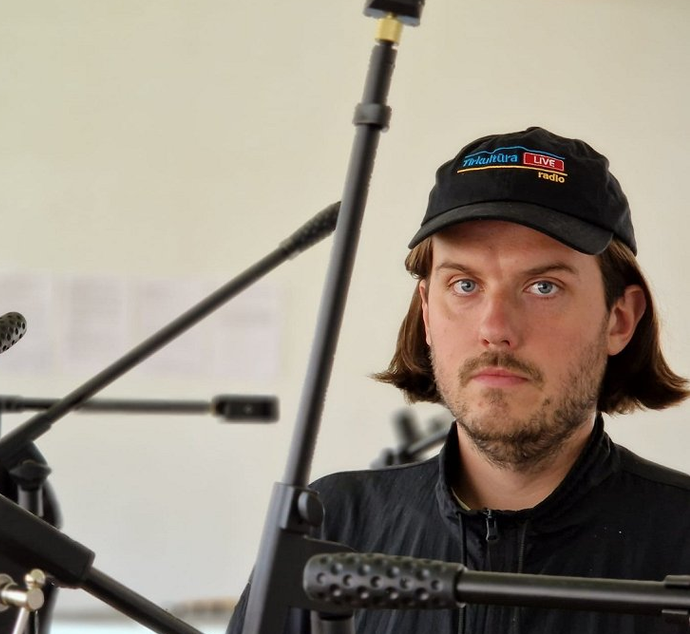
After a summer in a gallery – when Michael Holland joined the team – Tīrkultūra spent several years on the move between some five locations, from the Art Academy of Latvia to a kiosk in the city.
“We’ve been nomads. And for us it has never been only about sound – it’s about how radio can become an art form. If someone wants to come and DJ their poems into the microphone, they can. It’s an open space for expressing yourself through sound.”
The nomadic years are now coming to an end: this November, Reinis signed a three-year lease on a small studio in Riga.
“Now we finally have a solid place – somewhere we can invite people to talk whenever a festival comes to Riga, an interesting guest arrives or a theatre opens.”
A calling card on vinyl
The Utrecht concerts are not the end of the story. Music by all four duos will be released on a vinyl compilation, planned for early next year.
“We wanted to make a release as a form of documentation. At the same time, we’re a non-profit – we’re not trying to make a profit from it,” says Samantha. “And then Michael had a really nice idea: that it should be a physical object. He rightly said it’s almost like a beautiful, unique business card. You can send it out to festivals like Rewire or Unsound – all the festivals we attend, but where we’re not really seeing artists from the Baltics yet.”
The record will also be pressed in the region, at Green Lakes Pressing in Vilnius, Lithuania’s first vinyl pressing plant. This is part of the project’s guiding principle: from the residency venues to the pressing of records and the printing of posters, to support independent local spaces. The compilation will be released by ICRN itself.
Michael Holland is working on the track sequence.
“My job now is to understand what music we’ve got and put it in an order that makes a logical vinyl release. Like a proper album, really,” he explains. “I want it to flow like a proper album from one artist to the next.”
According to Reinis, each duo will contribute two or three tracks to the record.
A work in progress
The duo format is an experiment, and the organisers make no secret of the fact that it doesn’t always work.
“Maybe you just learn something from each other’s practice. Or maybe a connection really flourishes and you end up writing a whole album together,” says Samantha. “It’s definitely something we may build upon, and not only in music. We could pair up two radio stations to produce new radio art or radio plays together.”
At the opening of the anniversary edition, Bob van Heur said that he has never wanted to treat artists like products, and that nothing presented at Le Guess Who? has to be a finished product: it can just as well be an experiment.
“I thought, that’s so fitting, because it’s the same with Baltic Rehearsals,” says Samantha. “It’s a work in progress.”
Reinis believes that rehearsals like these should take place regularly – once a year, a little differently each time. Perhaps, he suggests, the artists themselves could choose whom to work with: for some, a single spark is enough to understand each other’s musical vocabulary, while for others even a month would not be enough to find a common language.
What happens next, no one yet knows – not even the organisers themselves.
“I’m sure something will happen, but I don’t know what,” says Michael Holland. “I just know, and hope, that thanks to ICRN, new music, new duos and new collaborations will keep appearing more and more often.”
More about the Independent Community Radio Network (ICRN) and its member stations: icrn.live
Baltic Rehearsals: New Baltic Sound at the 20th Edition of Le Guess Who? Festival 2026 is supported by the Baltic Culture Fund.
This article was written by Sofia Zaiceva and was originally published in Latvian for LSM.lv.