'And Then' – Interview with Ed Baxter and Michael Umney
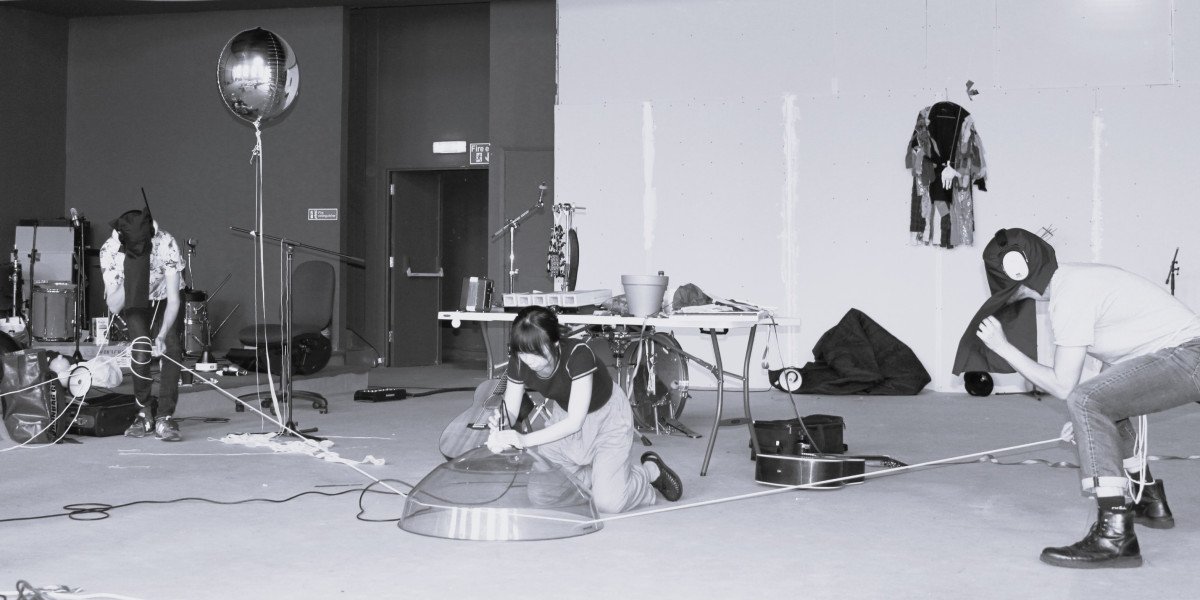
As part of our series of short interviews with the people behind ICRN’s commissioned research projects, we asked Ed Baxter and Michael Umney, the creators of 'And Then', a few questions about the series. Launching on September 9, 'And Then' is a radio series that revisits Ed and Michael's years of broadcasting and producing radio for Resonance FM, featuring over fifty shows from the archive and reflecting on their experiences of experimenting with and pushing the boundaries of the radio medium. Read on to discover more about the ideas behind the series and their relationship to radio.
The series was first aired on Weds 9th Sept 2026 from 4:15pm (GMT+1) on Resonance FM and on Mon 21st Sept from 1pm (GMT+1) on Resonance Extra, as well as on the airwaves of our network members.
How did you first meet, and how did your collaboration begin?
Ed: We met when Michael was a student in the city of Durham where he was part of a group of students organising an arts festival. Then in 2008 we collaborated on a couple of broadcasts at the AV08 media festival in Middlesbrough. When he left Durham, Michael moved to London to do a Masters degree in radio and also volunteer at Resonance. Later he joined the staff.
Michael: We met in a pub (called The Swan and Three Cygnets) when I was at university in Durham. I was part of a group of students who staged an international arts festival in the city. A friend who I’d recently met in an amateur touring production of A Midsummer Night's Dream had known Ed in London and thought it would be a good idea if he introduced us and then left. It was a good start.
About a year later Resonance were broadcasting from AV08 in Middlesbrough and invited me and some friends to bring a terrible student radio comedy about a man stuck on a desert island. We drove into Middlesbrough in waist high fog listening to a live performance of Antonin Artaud’s To Have Done with the Judgement of God on the Resonance RSL. I instantly gave up childish things. I could write a three volume bildungsroman about my early days with Resonance but for the reader’s sake I’ll leave it there.
Each episode in the series related to specific themes and topics – how did you choose these and what drew you to them?
Ed: They are simply the ideas that have rattled around in our heads for years. We then refined them for the programme titles: A second life around your life, About locale, Giving permission, Producing without thinking, etc.
Michael: I think we might have initially been aiming to discuss the components of the ICRN acronym - Independent, Community, Radio and Network. But over what was originally four hours of conversation we wandered around the themes which we’ve been talking about in studios and pubs and cars and on hillsides for most of the last twenty years eg. locale and community, collaboration, instinctive production, putting the world in the world and so on. We talked about what we’re always talking about but hopefully being mindful that other people would have to listen to us. I think we’re both very interested in the possibilities of vernacular creativity (amongst other things) and at this point we have a rich history of real shared work and imagined future schemes to draw on too.
Why did you choose to feature these particular 50 radio shows from the Resonance archive? What was your selection process like and were they productions you had worked on together?
Ed: Most are those one or both of us found memorable. Mostly I did the selecting, due to pressures of time. Quite a few are programmes we worked on together. At one point (Lee Patterson's field recording) you can hear us at work together in a forest in Scotland. Michael gets on with felling trees, I stand around and watch.
Michael: Ed did most of the selecting due to time and his incredible memory for what’s in the archive. I contributed everything that came naturally to mind and there are lots of things which are very alive in my memory partly because they’re so great and partly because I first encountered them at a very formative time. We’ve both more often been facilitators of other people’s productions than producers, in this context, but there were certainly a lot of things we were both present for or that were made before I joined the station or which Ed or others played me in the first few years I was involved. One of my first tasks as a volunteer was to produce a taxonomy of radio art in the station’s archive for Resonance’s show at the Raven Row Gallery so that had given me a good early overview of all the rich and crazy possibilities broadcasters had embraced whilst I was wasting my time going to school.
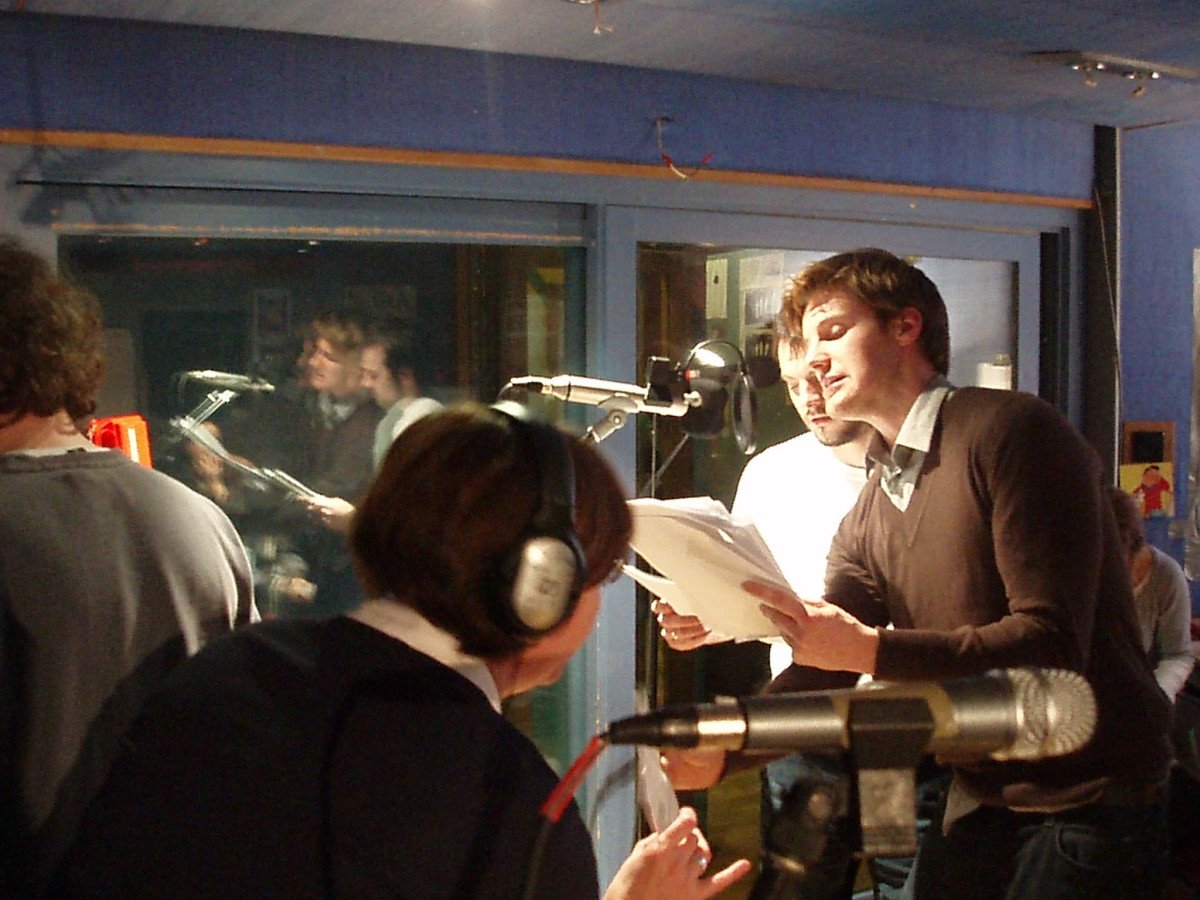
What is your relationship with radio? How did you first get involved in the field, and what has kept you connected to it?
Ed: Our relationship to radio (individual and collective) could best be described as experimental, interrogative, instrumental, socially and aesthetically creative. I got involved because a friend suggested it and I found I could resolve a lot of artistic problems via the medium. Michael had his own reasons.
Michael: I think I briefly heard Resonance as a teenager whilst combing the dial in the car waiting for my mum to come out of the supermarket. I think it was Hooting Yard with Frank Key. How the signal reached suburban Kent is a mystery. But I remember the excitement. Barely any multimedia internet then, so little flashes of other worlds were sucked up instantly like rain on dry ground. Certainly, I loved radio and especially old radio drama. I was very into music and like lots of somewhat lonely, dreamy people before and after me I thought the past and artists and weirdos and poets and books seemed like a good way to get away from a matcho boys school and a culture I didn’t much like.
Later on radio seemed like a wonderful marriage of practicality and poetry - that’s when I did an MA in it at Goldsmiths. Later still, after the emergence of podcast culture and the mainstreaming of so called ‘audio’ , staying became more about the communities of community radio - meeting all sorts of people and getting to be a little part of what is left of alternative London. I carried on working with Resonance because everything about it is so perfect and open and anti-commercial and antithetical to the rotten spirit of the age. It is home in a city where I have often not felt at home.
I kept making radio for the BBC because I turned out to be quite good at it and it allowed me to reach large audiences with slightly sideways, contrary, minorly experimental things. It gives me experiences of the many lives I’m not living and a very rich and interesting way of life, even if the day to day is often poorly paid and stressful. I don’t know if I’ll always make radio but I hope I’ll always be connected with radio (as distinct from ‘audio’ or ‘podcasting’) people. In the end it's always the people...
About
Ed Baxter is co-founder (with Phil England) and for 22 years was CEO of London’s arts-focused community radio station Resonance FM. He has worked as a writer, publisher, editor, typesetter, book-seller, artist, academic, and new music curator and concert producer. He is currently an Associate Lecturer in Sound Arts and Music Production at London College of Communication. Ed’s latest creative project is an avant-garde big band, Statue of Liberty.
As a radio artist he has received commissions from BBC Radios 3 and 4, Esch2022 European Capital of Culture, Exeter University Arts & Culture, HearSay International Audio Arts Festival, Instal, Kill Your Timid Notion, London International Festival of Theatre, Radiophrenia, Radio Revolten Internationales Radiokunst-Festival, Rough for Opera, Sound & Music, and Whitechapel Gallery. He won a BASCA Composer of the Year Award for “No Such Object,” his composition with Chris Weaver which formed the audio component of NVA's son et lumière extravaganza “Speed Of Light” at the 2012 Edinburgh International Festival.
Ed typically works collaboratively on ambitious radiophonic artworks, concerned with bringing into equilibrium disparate materials within the acousmatic frame of radio-space. These textually dense, musically promiscuous, formally exploratory, site-specific broadcast artworks typically involve diverse creatives - including John Paul Jones of Led Zeppelin; ambient composer Ben Neill; opera singer Rodney Earl Clarke; fine artist Luke Fowler; rock climber Jim Perrin; actor Tam Dean Burn; and an ensemble of 500 primary school pupils.
Michael Umney is a radio producer, site-specific broadcaster, documentary maker and sound recordist. His award winning creative audio documentaries can regularly be heard on BBC Radio 4 and the BBC World Service. He has produced or facilitated numerous experimental, collaborative broadcast projects from unexpected places including HearSay International Audio Arts Festival (Ireland), the Museum of London, the Port Eliot Festival, Derry / Londonderry City of Culture, The South London Gallery, Remote Performances from Outlandia, the Kochi-Muziris Biennale and the Science Museum, London. He was formerly Projects and Production Manager of London community art radio station Resonance FM.