
'The Grapevine' - Interview with Ieva Gudaitytė and Matteo Spanò
As part of our series of short interviews with the people behind ICRN’s commissioned research projects, we spoke with Matteo Spanò and Ieva Gudaitytė about The Grapevine, their series of radio essays exploring the lesser-known histories and possibilities of radio. Blending archival material, interviews, music and live conversations, the episodes delve into topics ranging from free radio movements and radical politics, to ecology and experimental broadcasting.
In the following conversation, Matteo and Ieva share what inspired the project, how their research informs the series, and what continues to draw them to radio as a space for creativity, community and critical thinking. The series was first aired on Friday 4th April 2025 from 5pm CET on Cashmere Radio, as well as on the airwaves of our network members. Listen here.
How did you first meet, and how did your collaboration begin?
We technically first met online, during covid, when Ieva was moderating an online discussion with community radios for Easterndaze festival. After a year so, Ieva reached out to Matteo when she was visiting Berlin and joined the closing party of Cashmere studio in Lichtenberg and that’s when we met in person for the first time – that’s also how Ieva got to know Cashmere. We also recorded an episode for a show Ieva was doing with a Vilnius student radio at the time, Start FM, in that old studio a day or two after the party, and it’s actually one of our first ever conversations as friends and comrades in radio.
What themes or topics did you decide to focus on, and why? What themes or questions did you want to explore through the series?
I think ultimately we want to find ways how radio can be a tool for free critical thought, experimentation, and community that we believe makes life better – and this way also helps to engage in broader politics and social justice questions. This is our “ideological” reason. Our curiosity or “researcher” reason for the show comes from trying to understand this media that is kind of ambiguous, kind of versatile, kind of old, kind of still relevant, kind of serious, kind of silly. And so we explore the "unruly" – various themes that we find are beyond the more common narrative around radio, with a hope that it can inspire and open the imagination of what this media can be for others.
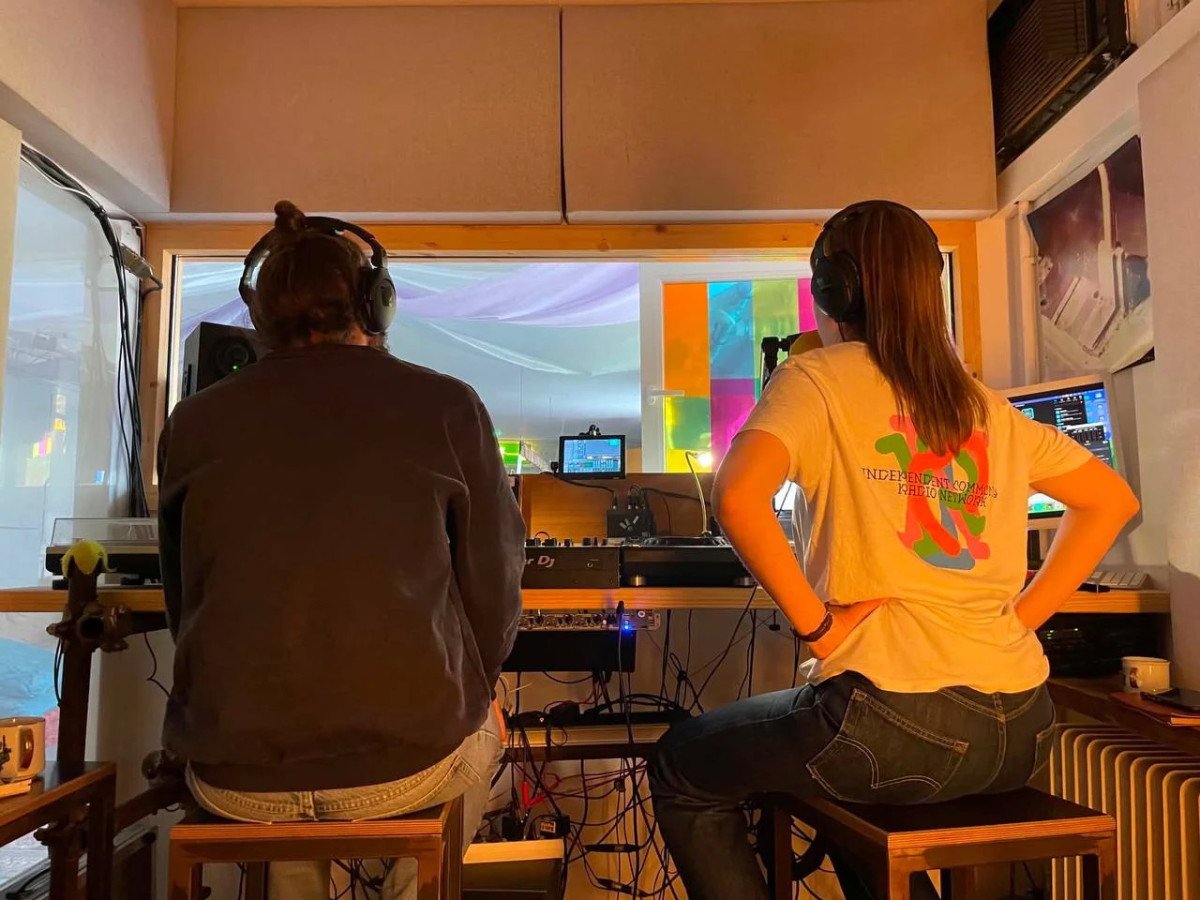
You have both been in the process of writing your Phd’s while creating the series – what are your focusses and how have they informed the series?
Ieva: My PhD (I defended at the end of March 2026) was interested in how people in Ukraine are using alternative sound media, predominantly digital community radio (shout out 20ft and Gasoline teams), to make sense out of their lives at war, and why they choose radio formats to do so. I am in musicology, so a lot of my take is kind of anthropological, between what can be understood as ethnomusicology, media studies, and sound studies. This show is a great site to explore some of the historical examples and philosophical ideas around radio, and work them through with Matteo before some of them make it to the page. But more than the intellectual bit, this friendship, this show, and this radio (Cashmere) made the PhD actually fun and always reminded me what’s really important and why am I doing this.
Matteo: A lot of the topics we discuss in the series feed back into my research, and I managed to get great insights on material I was already working on by discussing them with Ieva – that’s the great thing about our collaboration, it always develops in ways you wouldn’t expect or takes you places you haven’t been before, even when the road taken is familiar. My research focus is on the Italian free radio season of the mid 1970s, and the more I look into it the more it seems to be a really pivotal historic moment for radical movements, not just in Italy or Europe. From there, I try to think about the project(s) of radical media today, and how that can help us liberate our lives from all that doom that comes with capitalism. So I guess my goal is trying to create access points for the present day to all the histories that feature in the series, so that they can be useful today, they can inform, inspire and ignite current media practices and struggles.
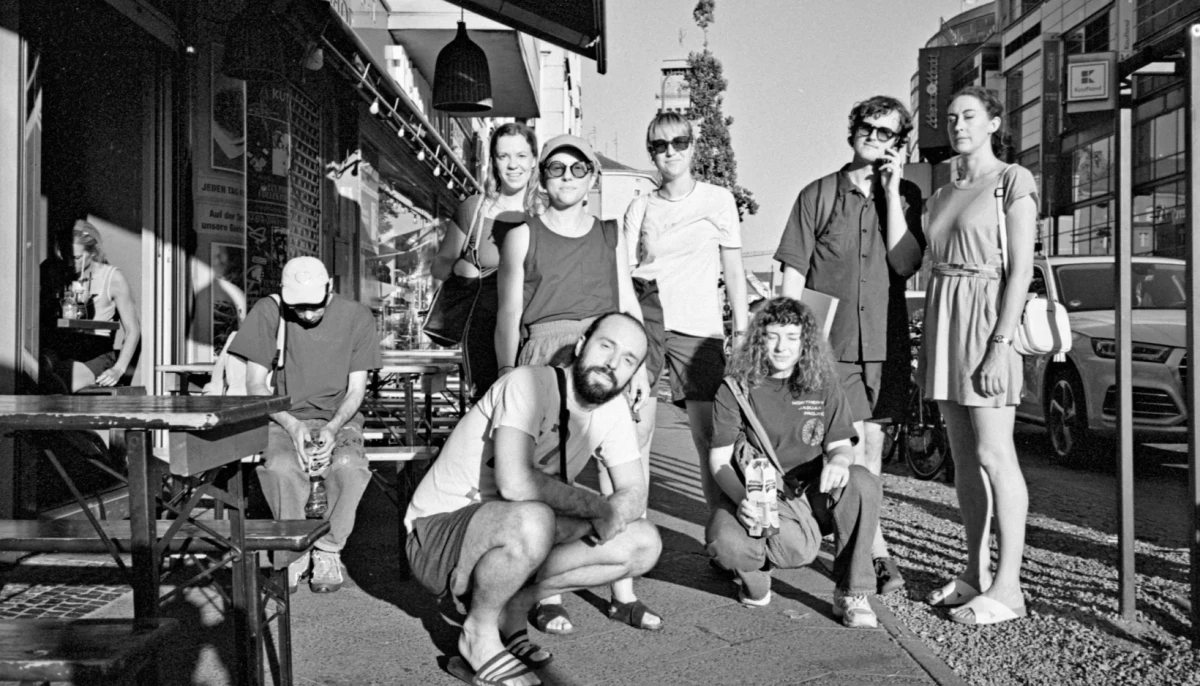
What brought you to the field of radio and what keeps you engaged with it today?
Ieva: My journey to radio started in Budapest, where I was interviewing people from Radio Tilos and Lahmacun Radio for my Master’s thesis on how community radios resist Orban’s media monopolisation. This is where I got a crush on radio, and then the Cashmere community made me fall in love and marry this thing, I guess. And since I’m being cheesy, that is also why I am still engaged with it – because of the people, and the kind of work we do together that feels meaningful and makes me happy. No matter how much time I can spend in libraries, or even when there was a time where I was doing more outreach about radio, all of that meets its limits to me. But in the studio, I am happy.
Matteo: I got interested in radio after a workshop with cyber-feminist radio pirate Diana McCarthy at Berlin’s Art in Context faculty – through her I got to know Radio Alice, which was my main inspiration for Cashmere Radio and is also the main focus of my research, so in a way I’m still quite close to the roots of things. What keeps me engaged today are the people that I get to do radio with, that I learn from, and that I share the joyful moments of the practice with.
Matteo Spanò is a researcher and radio producer. His work focuses on experimental radio practice, visual and sound poetry, and the intersection between media culture and radical politics. He holds a B.A. in Electroacoustic Composition from the Paganini Conservatory, Genoa and an M.A. in Sound Studies from the UdK, in Berlin. He is co-founder of Cashmere Radio. Together with the Electroacoustic Orchestra Galata, he participated in the 58th Biennale Musica in Venice. His radio productions have been broadcast on Cashmere Radio, Deutschlandradio Kultur, Radiophrenia, Resonance.FM and WFMU. He is currently a PhD student at the UdK - Sound Studies with a research project on Radio Alice and free radio culture.
Ieva Gudaitytė recently completed a PhD in Musicology at the University of Oslo. Her research investigated the aural politics of alternative sound media communities in Ukraine and their partners across Eastern and Central Europe. Building on her previous research and current involvement in the region's independent community radio scene, her practice operates at the intersection of sound studies and cultural musicology. Her wider work includes cultural journalism, creative writing, curating, teaching, and various forms of radio work.
The series was made possible by the support of by Nordic Culture Point.