RadioRadioRadio Budapest: A Full Weekend of Listening, Sharing & Exploring the City
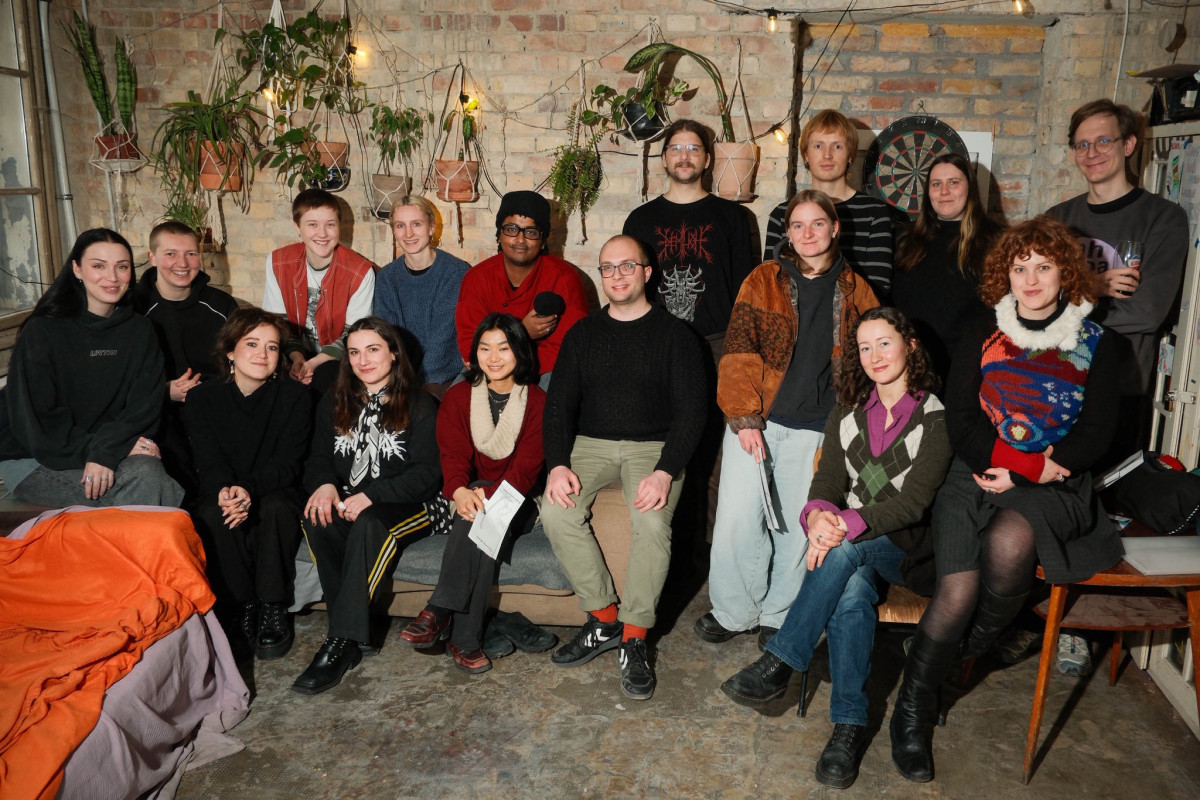
Within the RadioRadioRadio project, community radio makers from across Europe gathered in Budapest for an intensive two-day program dedicated to exchange, collaboration, and critical reflection. The meeting offered a platform for collective thinking on the current state and future of independent radio, combining theoretical discussion with practical experimentation and shared experiences.
Exchange, Exploration, and Urban Listening (Day 1)
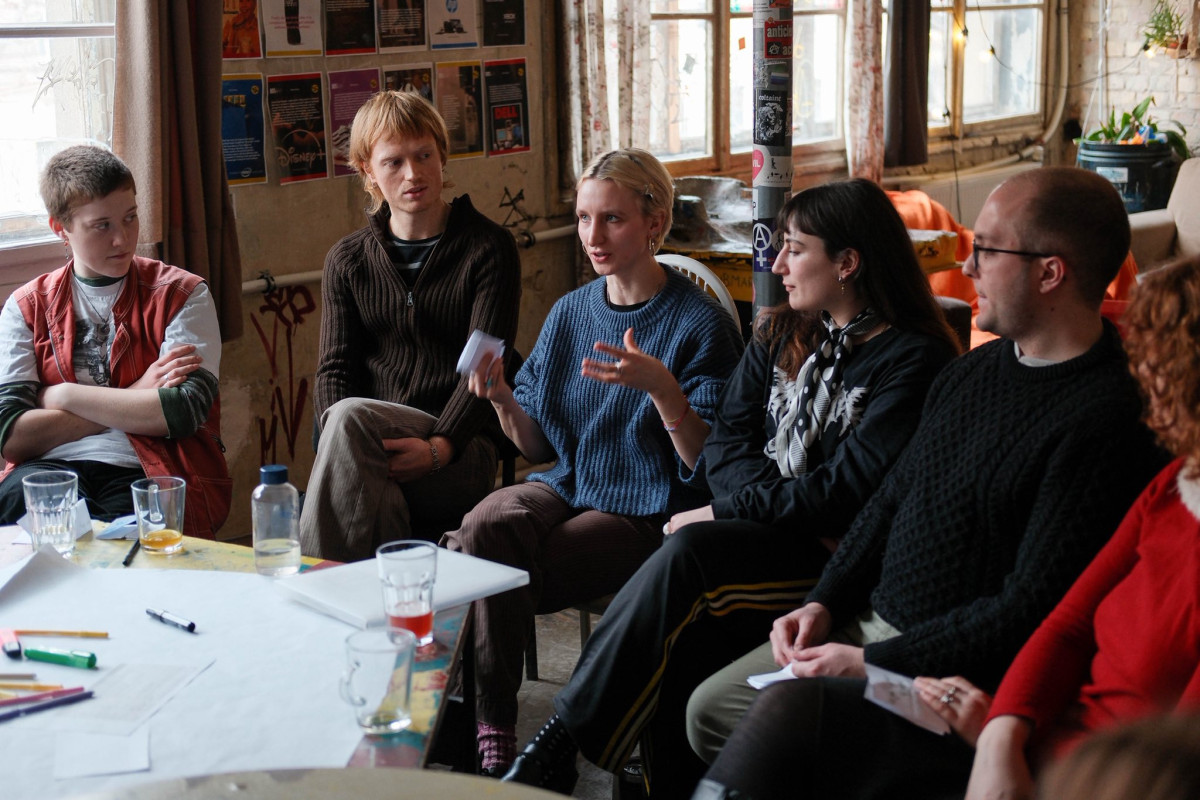
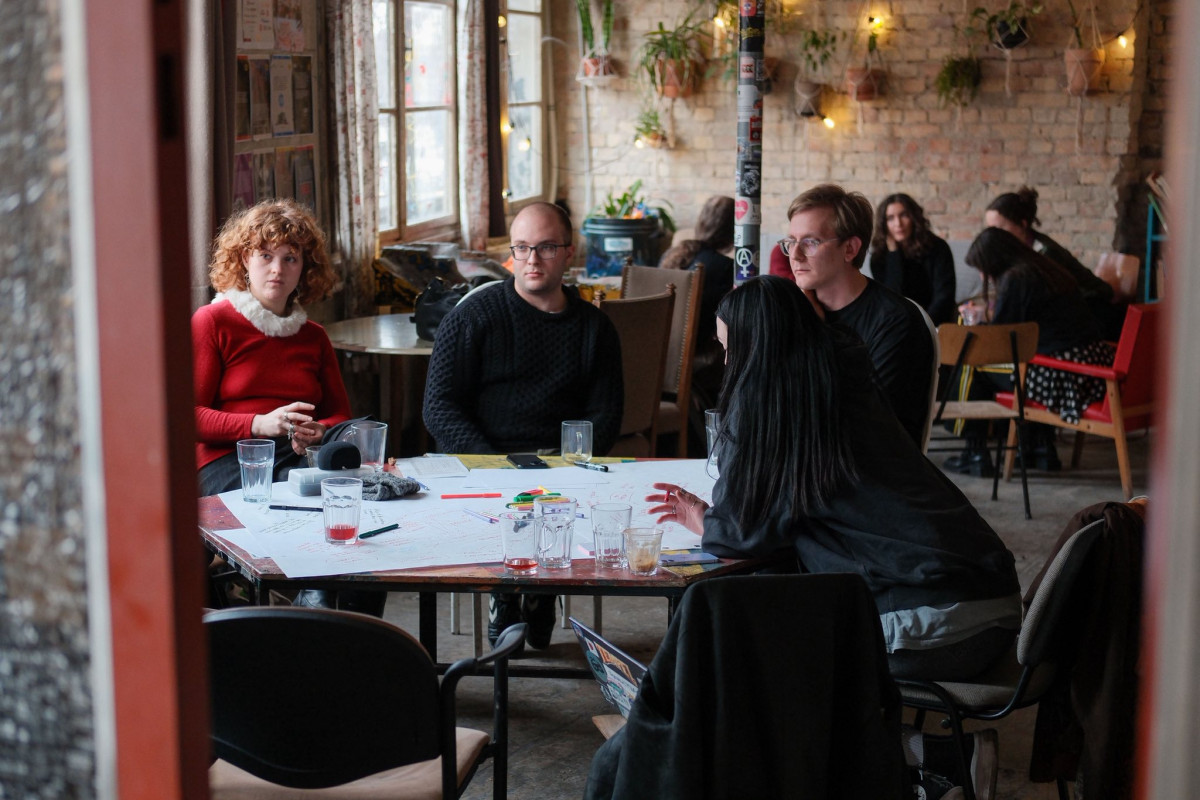
We began the program at Gólya Presszó, where participants introduced their radios and entered an open group discussion about knowledge sharing, structural challenges, and possibilities for cross-border collaboration. Before lunch, we outlined the concept for a co-produced episode that we recorded on the next day. The discussions were connected to the theme of the Ecology of Listening, exploring listening as both a media practice and a form of social awareness. A guided sound walk complemented this theme, inviting participants to pay attention to environmental sounds and reflect on how listening shapes our relationship to each other and our surroundings.
The group then visited Kazán Community Space, gaining insight into its operational model and community-driven structure.
In the afternoon, we shifted from discussion to embodied listening with a sound walk through Budapest’s 8th district. Participants tuned into the subtle acoustic textures of the urban environment, reflecting on listening as both a technical practice and a political gesture. These impressions were also recorded and will be featured in a future episode within the project.
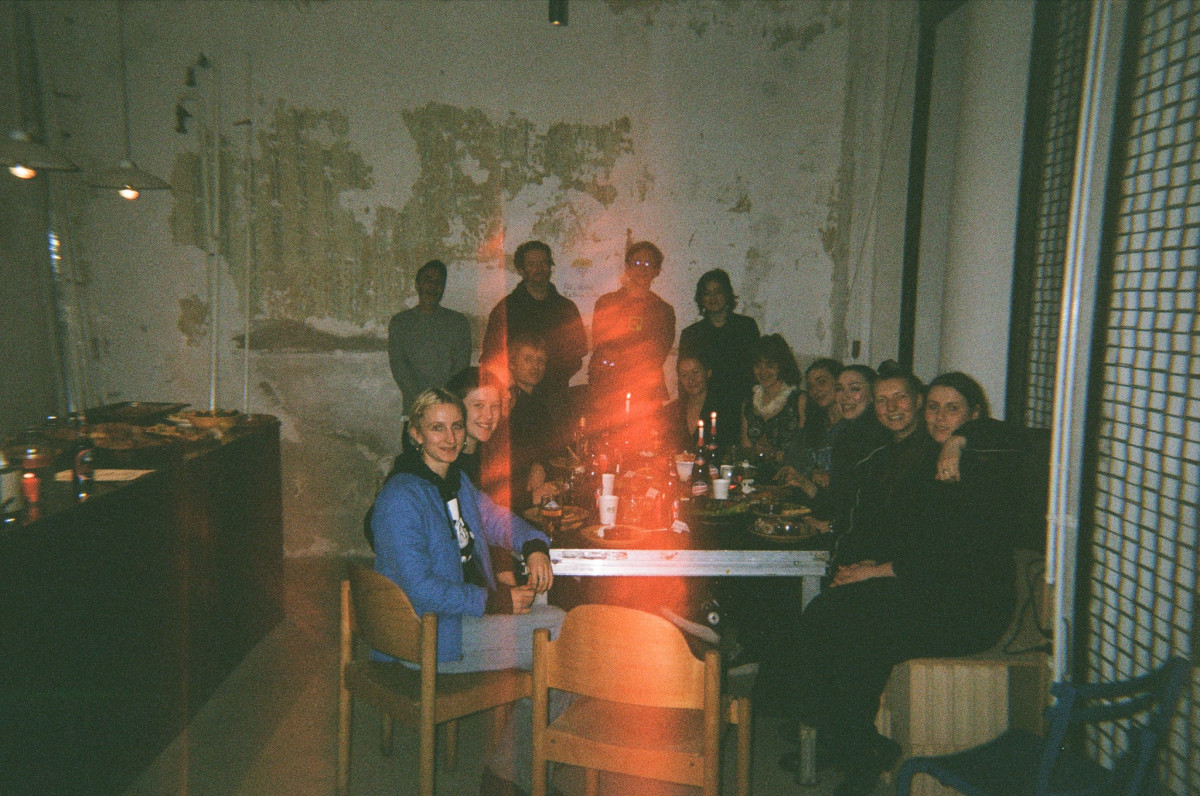
The day continued with a cultural visit to ISBN+, an independent art bookshop and project space where contemporary art intersects with print culture, and concluded with a shared dinner, allowing for informal networking and deeper conversation.
Production, Infrastructure, and Community Practice (Day 2)
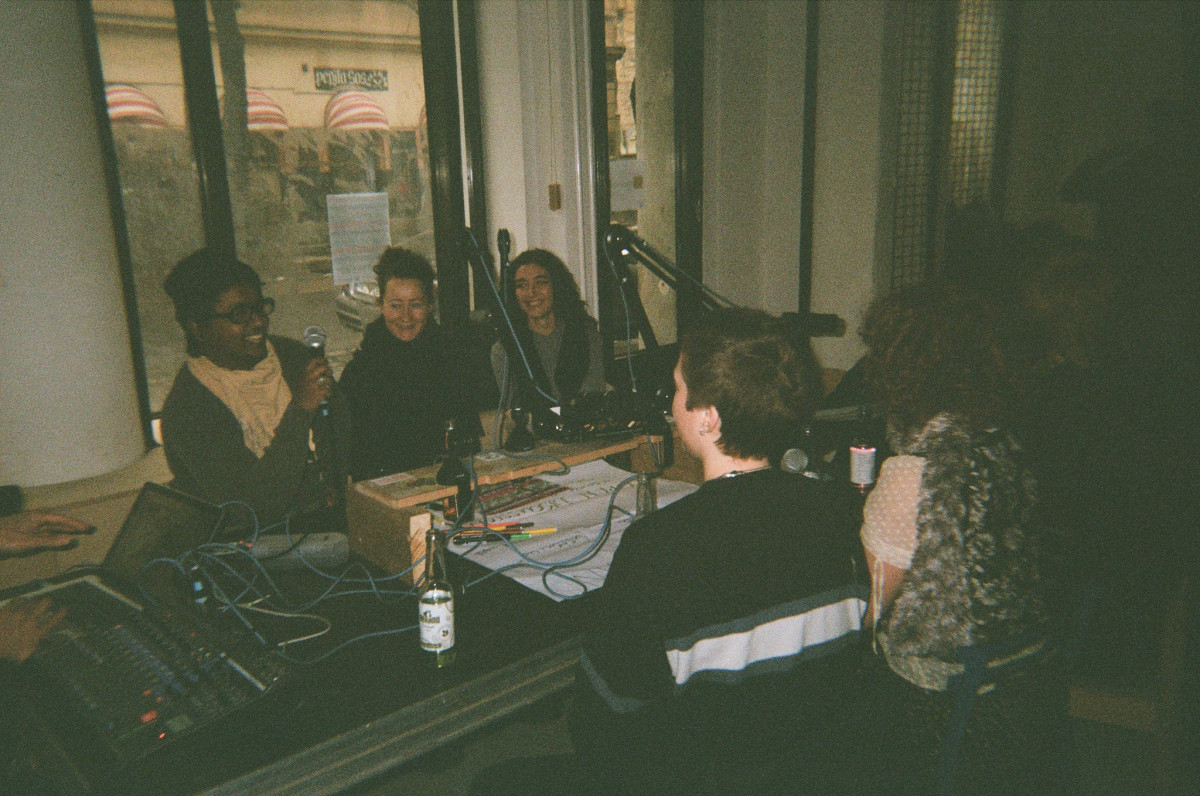
The second day was dedicated to production. Two English-language podcast episodes were recorded with community radio members and will be released in the coming period as part of the project’s monthly series. The RadioRadioRadio initiative aims to make community radio more accessible to younger generations from both technical and content-production perspectives. Episodes are produced in English and shared among partner stations, strengthening a European network of independent broadcasters. One of the recordings is already out, listen to it here.
On Saturday, participants also worked in a newly established studio space. Later in the day we also took part in a special workshop at Nº space, located in Nyolcésfél. Our time together concluded with a public event where international participants shared music in Budapest for the first time, so they were able to introduce themselves to the Budapest scene.
Workshop Highlights
Technology, Infrastructure & Digital Futures
The technical workshop addressed four key themes: perspective, attention, DIY solutions, and audience realities.
Participants reflected on diverse infrastructural conditions across Europe. A notable example was by RadiOrakel station that still broadcasts terrestrially “through the wire,” while maintaining a large analogue archive awaiting digitisation. The discussion emphasized that archiving is not merely a technical transfer from tape to digital format, but a curatorial and political act that shapes memory and accessibility.
The concept of attention emerged as central. In geographically limited regions such as Iceland, radio remains a crucial societal pillar. Participants questioned how community radio can effectively “ping” or notify audiences in an oversaturated digital environment. What is the equivalent of the cowbell, a simple, recognisable signal in today’s fragmented digital spacetime?
Under DIY approaches, several radios shared strategies for technological autonomy. Dublin Digital Radio has developed custom scripts and tools to support show hosts, avoiding the limitations of mainstream platforms. Widely used audio platforms such as SoundCloud, Mixcloud, Spotify, and Bandcamp were critically discussed for their structural incompatibility with the ethos of community radio.
Finally, the workshop addressed audience difference across Europe. Access to technology, digital literacy, and infrastructural speed vary significantly by region. The “future” of digital radio arrives at different times and at different costs depending on geographic and political context. An open panel gathered these lived experiences, underlining that digital opportunity is unevenly distributed.
Community, Politics & Autonomy
The second workshop focused on community and participation, cultural and political dimensions, and power voice, and autonomy.
Participants examined radio as a safe space: who is able to speak, and who is positioned as listener? Community radio was framed not only as a broadcasting platform but as a social infrastructure extending into events, workshops, and offline presence. The possibility of horizontal, non-hierarchical media structures was debated, alongside the realities of volunteer burnout and the necessity of care within radio communities.
From a cultural and political perspective, independent radio was described as a form of cultural resistance. Discussions addressed platform ownership, algorithmic power, and the question of who controls the airwaves today. Representation, across gender, class, language, and accent remained a recurring concern.
A major shared theme across all participating countries was financing and governmental policy. Regardless of differing national contexts, financial uncertainty and project-based funding structures significantly shape editorial autonomy. Even in countries with strong free speech traditions, funding systems are often limited and conditional.
In several contexts including Hungary and Germany, participants noted that governmental funding can be indirectly influenced by political alignment, where “speaking out of turn” may jeopardise support. Interestingly, some stations observed a paradox: entering into carefully selected brand partnerships sometimes allows greater editorial freedom than accepting official public funding tied to restrictive frameworks.
Despite diverse local realities, the overarching challenges were remarkably similar: financial sustainability, political pressure, and the preservation of autonomy. While potential strategies were discussed, the absence of a unified European framework for supporting independent community media remains a structural challenge.
Communication, Platforms & Audience Engagement
The third workshop focused on communication strategies, audience engagement, and the evolving relationship between radio and digital platforms. Participants reflected on how community radios navigate a fragmented media landscape where platforms, habits, and expectations are constantly shifting.
A key observation was that communication channels differ significantly across countries and generations. Facebook, once central to radio promotion, is no longer considered effective in many contexts. While Instagram currently appears to be the most commonly used platform, participants agreed that social media should function primarily as a gateway rather than a destination. The goal is not to produce radio content for social media, but to direct audiences toward the radio’s own website, where editorials, photos, program information, and broadcasts can exist in a more autonomous and curated environment.
The responsibility of promotion was also debated. Many hosts use their personal platforms to promote their shows, which can strengthen visibility for the station as a whole. However, questions emerged: Is this part of the host’s role? Where does individual initiative end and institutional responsibility begin? The balance between collective communication strategy and personal engagement remains delicate.
The workshop also addressed the heritage of radio as a time-sensitive broadcast medium. Participants questioned whether strictly scheduled programming aligns with contemporary lifestyles and attention patterns. It was widely acknowledged that on-demand listening is not a threat but a valid and necessary extension of radio culture. Notifications, whether through newsletters, apps, or other channels could help audiences reconnect with live moments without enforcing rigid listening habits.
Algorithmic mediation was another critical theme. Community radios expressed the need to resist platform-driven visibility logics and instead develop their own methods of producing and curating content. Open-source event promotion platforms were mentioned as alternatives to corporate social media infrastructures. The discussion emphasized autonomy in communication practices as much as in content production.
Engagement strategies were explored in relation to format. The dynamic between live and pre-recorded material offers different possibilities: live broadcasts allow for real-time interaction, such as Discord chats where listeners can directly contact hosts, creating immediate exchange. Pre-recorded formats, on the other hand, provide flexibility and accessibility. Rather than positioning these as opposites, participants considered how both can coexist strategically.
Physical space emerged as a powerful communicative tool. Radios that operate alongside a bar or community venue create opportunities for embodied listening. When people gather in a shared physical environment, radio becomes not only something heard but something socially experienced. This spatial dimension can deepen community involvement beyond digital interaction.
Finally, the group reflected on expanding media forms. Should video play a larger role in broadcasts? While opinions varied, there was agreement that visual elements, when used thoughtfully, can complement rather than replace the core listening experience.
Overall, the communication workshop highlighted a central tension: how to remain accessible and visible in a platform-dominated environment without surrendering editorial autonomy. The discussion reaffirmed that communication is not merely promotional; it is part of the political and cultural practice of community radio itself.
RadioRadioRadio Budapest demonstrated that community radio is not merely a medium, but a living ecosystem: technical, social, and political. Through shared listening, joint production, and critical dialogue, the gathering strengthened transnational connections and reaffirmed the role of independent radio as both a cultural practice and civic infrastructure.