
Hungary After the Election: A Democratic Turn and Its Implications for Independent Culture
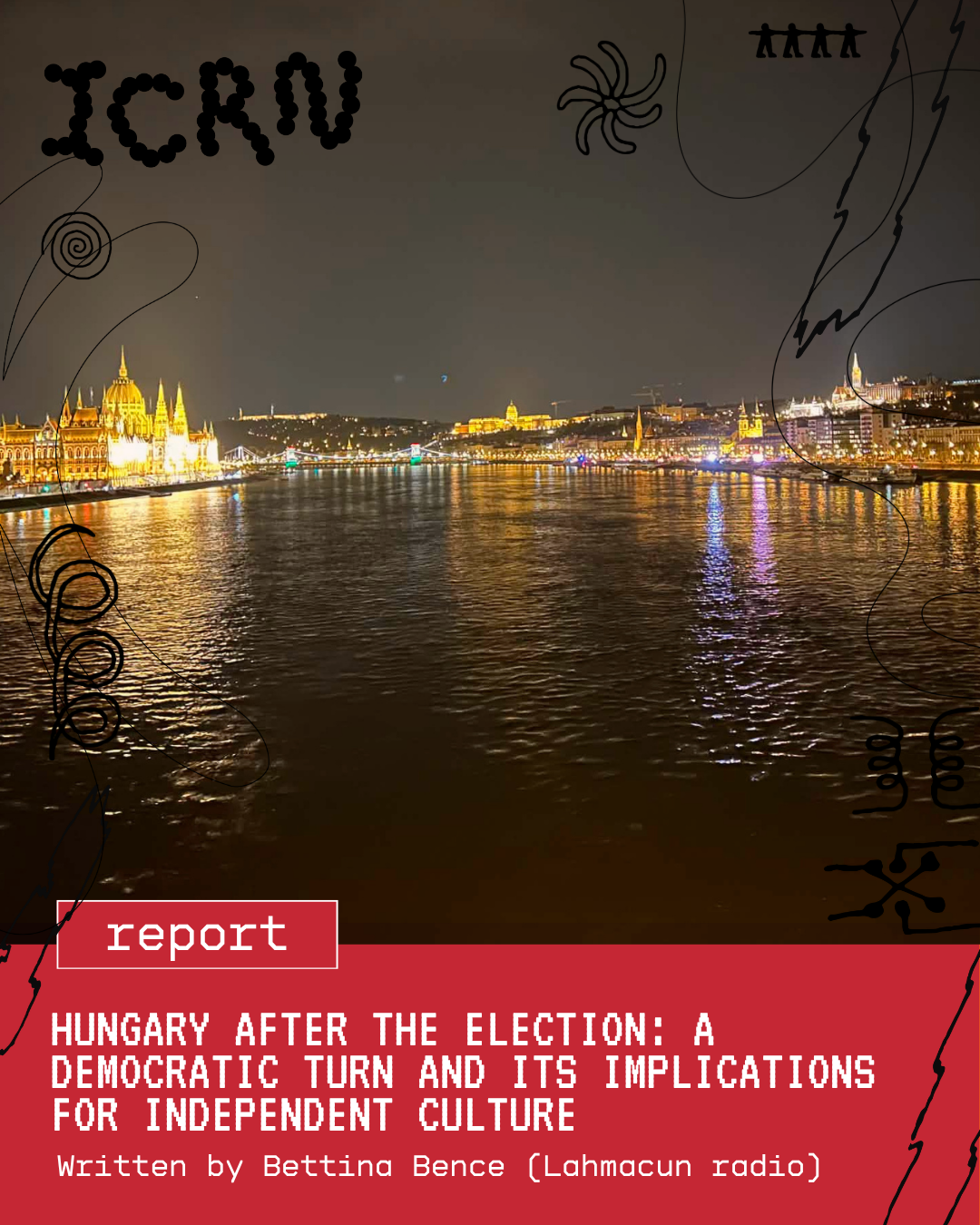
On April 12, Hungary held parliamentary elections that marked a historic and deeply emotional turning point for the country. As the results became clear, Budapest was filled with a rare sense of collective euphoria: after sixteen years of Viktor Orbán’s rule, the pro-European opposition party TISZA secured a decisive victory and is expected to hold a two-thirds majority in the new 199-seat parliament.
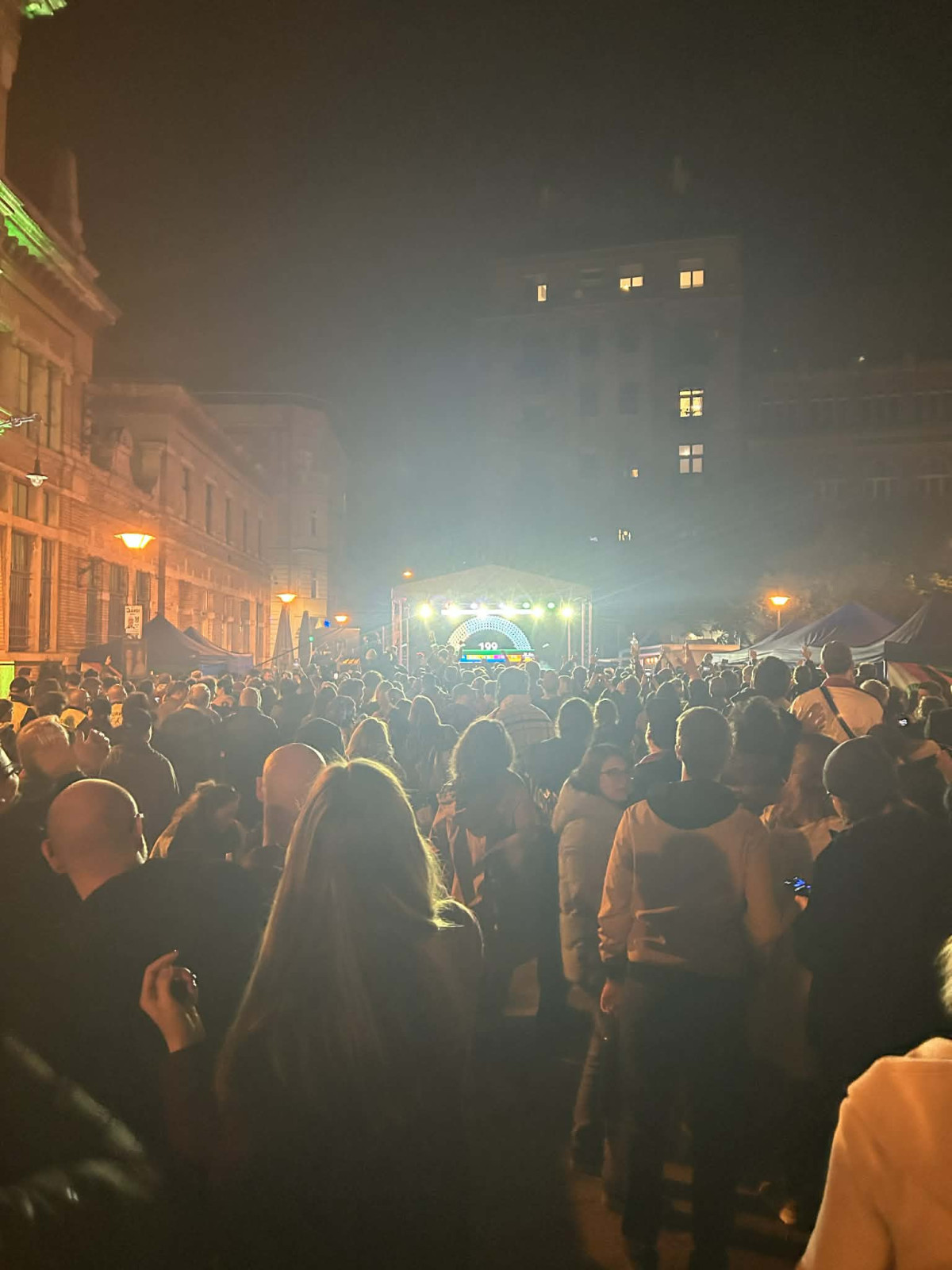
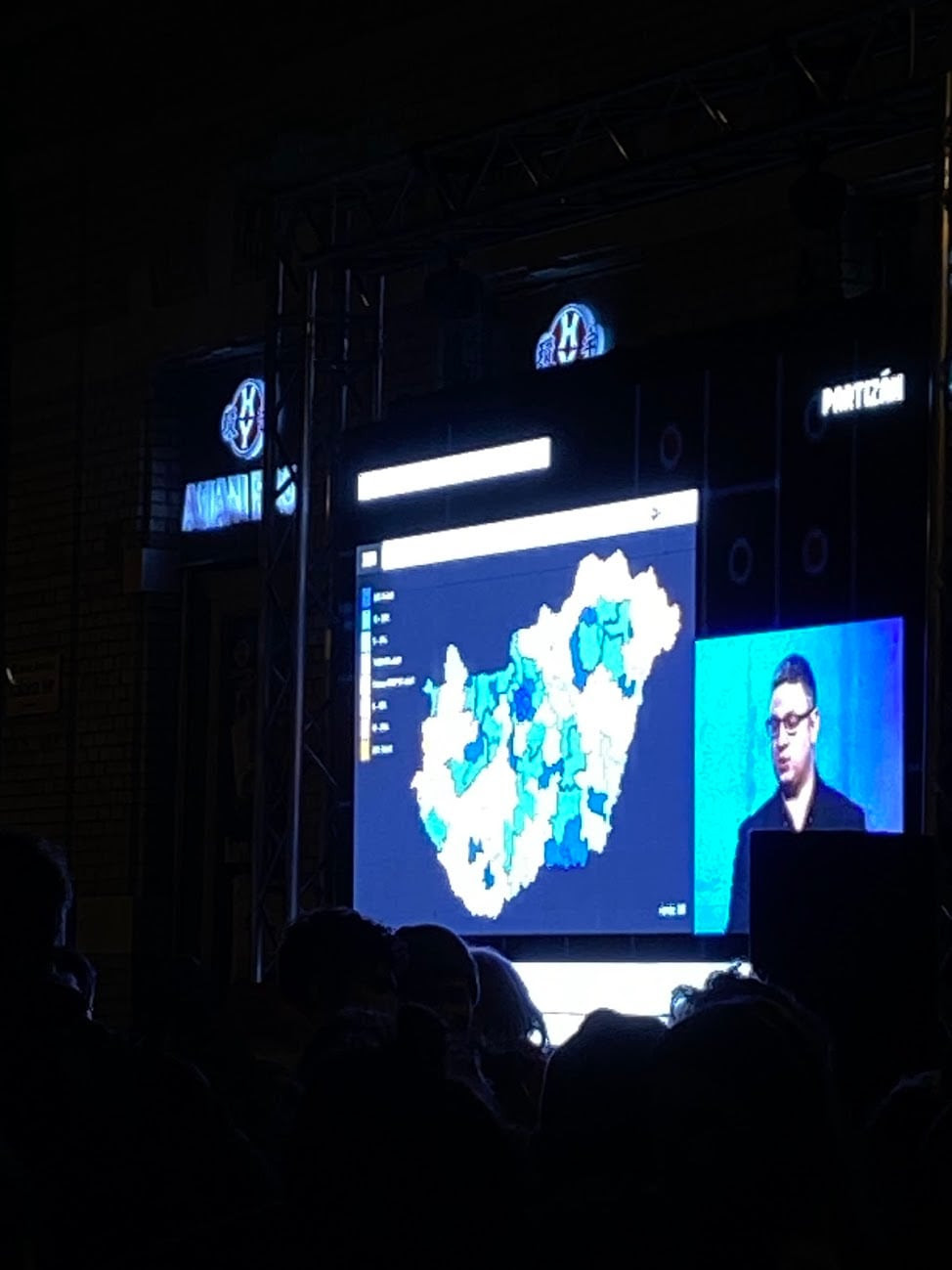
With 98% of the votes counted, TISZA was projected to win 137 seats, compared to Fidesz’s 56 and the far-right Mi Hazánk’s 6. The election night was experienced by many as an extraordinary public moment. Tens of thousands of people gathered on the streets of Budapest, celebrating with a sense of relief, joy, and renewed political possibility. We are writing in the aftermath of this extraordinary moment, as the election results suggest not only a change in government, but the possibility of a broader political and institutional transformation. For those working in independent culture, this shift may also signal new openings for greater transparency, fairer access to resources, and a more supportive environment for autonomous cultural work.
While an official government programme is awaited, wide-ranging reforms can be expected across nearly all areas of state competence, judging from TISZA’s manifesto. TISZA’s victory points toward a far-reaching political and institutional transformation in Hungary, with reforms expected across almost all areas of government. Key priorities include restoring the lawful functioning of state institutions, investigating the fraudulent use of public funds, and rebuilding public trust through greater transparency and accountability. The programme also places strong emphasis on restoring public media freedom and improving education, healthcare, and social support, suggesting a broader effort to reverse structural decline and strengthen the social foundations of the country.
In foreign policy, the programme signals a clear reorientation toward Europe, reaffirming Hungary’s commitment to the European Union and NATO while indicating an end to Russian influence. At the same time, the new government is expected to pursue a more constructive approach to Ukraine, although without supporting any fast-tracked EU accession process. Economically, one of the government’s central challenges will be to present a credible financial plan that complies with EU rules and helps unlock frozen EU funds. TISZA argues that this can be achieved partly through expenditure savings, especially by reducing corruption, overpriced public procurement, wasteful spending, and prestige investments, while redirecting state support toward areas that contribute more meaningfully to long-term productivity and development.
The programme also points toward a fairer and more stable economy. Joining the eurozone in the future could help make Hungary’s economy more predictable, reduce financial risks, and provide a stronger safeguard against inflation. At the same time, proposals such as a wealth tax on forint billionaires suggest a shift toward a more balanced distribution of public burdens. Still, the text makes clear that growth alone will not be enough: politically difficult but necessary fiscal and structural reforms may need to be introduced early in the government’s term. Overall, the programme presents a vision of rebuilding Hungary’s institutions, improving fairness and efficiency, and re-anchoring the country firmly within Europe.
For independent cultural organisations, these broader political dynamics have translated into very real structural challenges. In recent years, many initiatives have had to operate in an increasingly fragile environment shaped by shrinking access to public support, politically uneven resource distribution, institutional uncertainty, and a broader public climate that has often marginalised critical, experimental, and community-based cultural work. For organisations such as Lahmacun Radio, this has meant building international collaborations, independent platforms, and public programmes under conditions of long-term precarity, where sustainability has depended less on public infrastructure than on self-organisation, solidarity, and transnational networks. This is precisely why the current political moment matters: it presents not only the possibility of democratic renewal at the state level, but also a concrete chance to rebuild the structural conditions in which independent cultural organisations can work with greater stability, visibility, and autonomy.
A potential political shift in Hungary could create a more enabling environment for the independent cultural sector by reopening the country toward European cooperation, reinforcing institutional transparency, and reducing the political capture of public resources. Commitments to bring Hungary back into the mainstream of EU politics, unblock frozen EU funds, and restore the rule of law through lawful institutional reform would be particularly significant for independent cultural actors, whose long-term sustainability depends on predictable governance, transparent funding structures, and renewed access to European frameworks. One of the key questions, however, will be whether these broader democratic and institutional reforms are accompanied by a more transparent, predictable, and depoliticised system of cultural support. Beyond access to funding, independent cultural actors also need professional autonomy, fairer allocation of resources, and decision-making structures that are not shaped by political loyalty. The continuation of Fidesz rule would likely have further weakened the autonomy of independent cultural actors. As several independent cultural and civil society actors warned in response to the proposed “Sovereignty Protection” legislation, the bill would have created new tools to stigmatise and potentially sanction organisations receiving foreign support and engaging in public life. For independent cultural organisations, this would not only have threatened access to international funding and partnerships, but also deepened the climate of fear, self-censorship, and political vulnerability in which autonomous cultural work has already had to operate.
Equally important are proposals to strengthen media transparency, reform the public broadcasting system, and introduce safeguards for more impartial public communication, as these steps could contribute to a more plural and accessible public sphere for cultural production and critical discourse. Plans to join the European Public Prosecutor’s Office, review public spending, and reduce support for politically captured institutions also suggest the possibility of a fairer distribution of resources, which is a key issue for the independent arts scene in Hungary. A renewed European orientation could also help rebuild international partnerships, mobility opportunities, and collaborative platforms that have become increasingly difficult to sustain in recent years. In this context, support for freedom of assembly and a more rights-based public atmosphere may further improve the conditions for independent cultural initiatives, community-based practices, and socially engaged artistic work.
Ultimately, the future of independent culture in Hungary will depend not only on political change at the governmental level, but also on whether the long-term structural conditions for autonomy, plurality, and artistic freedom can genuinely be restored. In this sense, the election result matters not only because it opens the possibility of democratic renewal, but also because it may have interrupted a further tightening of legal and financial pressure on independent cultural actors. A continuation of the previous government could have meant a deeper institutionalisation of suspicion toward internationally connected, critical, and socially engaged cultural initiatives.
Bettina Bence is a Budapest-based independent curator and art educator working with contemporary art and supporting the visibility of independent art spaces. She is a board member and communications coordinator at Lahmacun online community radio, where she also hosts a programme on emerging artists and contemporary art initiatives. She also serves on the board of the Independent Community Radio Network and, since 2024, on the Executive Committee of the Reset! Network.