Kaunas Radio History Tour
Alio alio, kalba Kaunas, Lietuva
6 km, 98 years
“In 1926, Lithuania was one of the first countries to aim big and apply this new invention [radio] beautifully... It was on Vytautas Hill, a perfect strategic location. Very high pillars, quite elegant, shot up 150 metres. And to the honour of Lithuania, I have to say that at that time there were only four powerful stations in the world. [...] Kaunas then had a 10 kW antenna. It was one of the most powerful stations.”
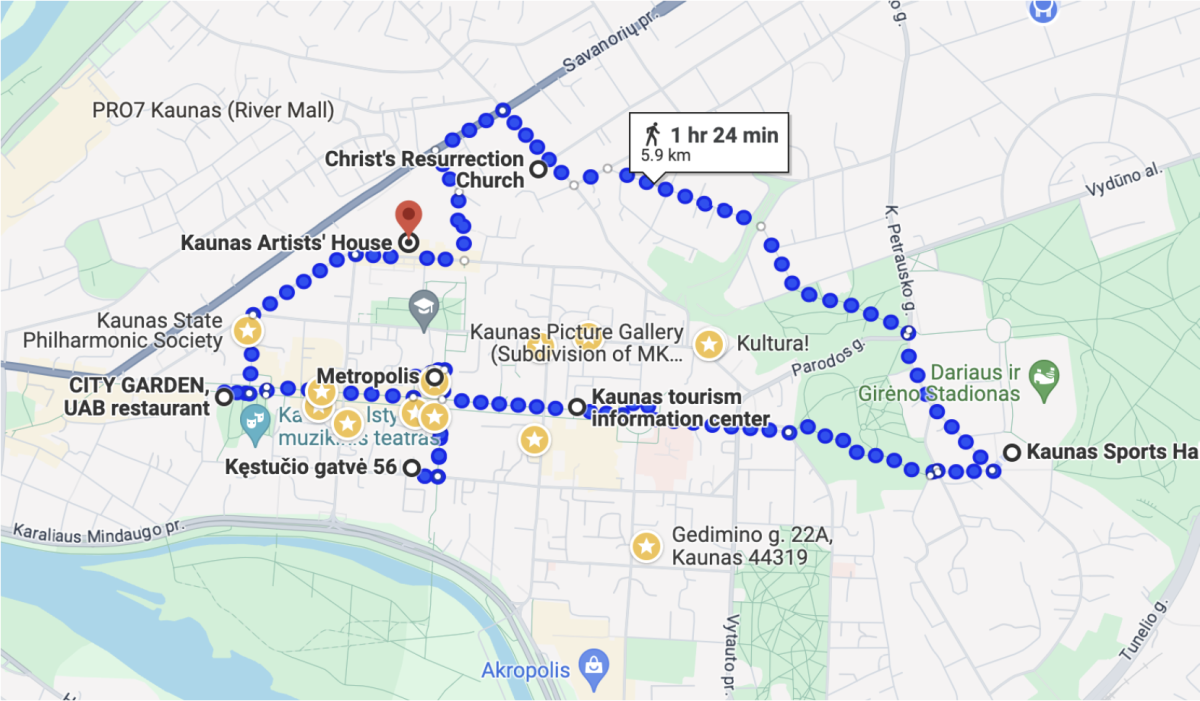
The route is approximately 6 km long. We will climb one hill but the rest of the trip is flat and paved. Along the way, we will additionally see many important historic objects and sites, as well as contemporary city elements. You can definitely take pictures everywhere. It’d be best if the participants had some water and snacks with them, but there will be shops along the way.
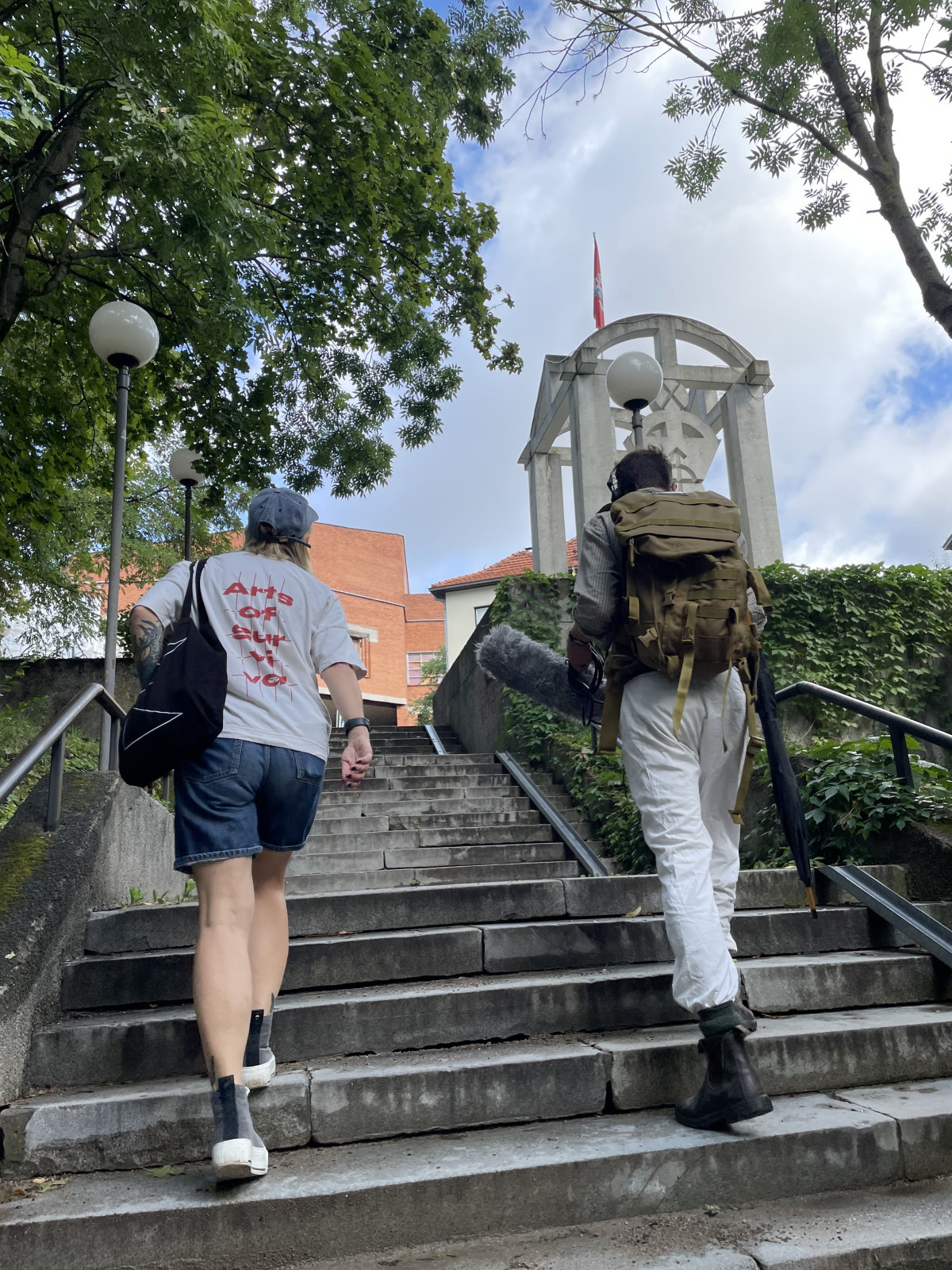
Meeting at Kaunas Artists’ House at 11:00 am. A short introduction to the topic and a walk up the hill to the Christ’s Resurrection Basilica (1), where we’ll learn about the Soviets’ decision to set up a radio factory in a church.
The route then continues via Petrausko Street to the radio station that started Lithuanian radio broadcasts in 1926 (2);
The next stop is back in the city centre at the former Philips radio shop and the Dutch Consulate (3); here, you will hear a story of Righteous among the Nations, Jan Zwartendijk - Mr. Radio Man.
Then, our trip continues down Kęstučio Street, with a stop at KaRaDi (4), a tax-avoiding interwar radio factory that was nationalised before the taxman received the money;
We enter the pedestrian boulevard Laisvės Alėja, where we stop at the famous interwar restaurant Metropolis (5) and we pay tribute to singer Danielius Dolskis, who often sang on the radio;
A stone’s throw away is the current Lithuanian Radio and Television building (6). Here, you will hear a brief introduction to the the 1941 June Uprising events and the events of January 1991.
An important stop is the Kaunas State Musical Theatre (7), which not only used to broadcast operas but was also the site of the 1972 self-immolation of Kalanta, whose generation’s worldview was heavily influenced by banned Western radio programs as Radio Luxembourg and Voice of America;
The tour finishes at Kaunas Artists’ House (8) around 1:00 p.m.